Hi, I’m Bryan.
Software Developer & Consultant
I build tools, write about what I’m learning, and tinker with the software and systems that help me do better work.
bparonto@gmail.com · github.com/apisandipas · bryanparonto.com
About

I'm a UI-focused full-stack developer in Chicago. For more than fifteen years I've built for the web: agency sites and startup SaaS, e-commerce storefronts, design systems, and the VA.gov homepage, which 20 million people visit every month.
What drives me is creative problem-solving and doing quality work: interfaces that are accessible and fast, backed by sensible APIs, and delivered by teams that plan well. I'm a positive, pragmatic planner who'd rather work smart than work long, and I come to the table with solutions.
Outside of client work I live in Emacs, tinker with Linux, and write about both on the blog.
Now
NEXT Building client software at Atomic Object
- Done: Three years of consulting on custom web software (clients confidential)
- Done: Living in Emacs and org-mode, on Linux, for nearly everything
- In progress: Writing again: Emacs, Linux and front-end craft
Work
Things I've built because I wanted them to exist. They're the best evidence I can offer of how I work: read the code, read the notes, try them.
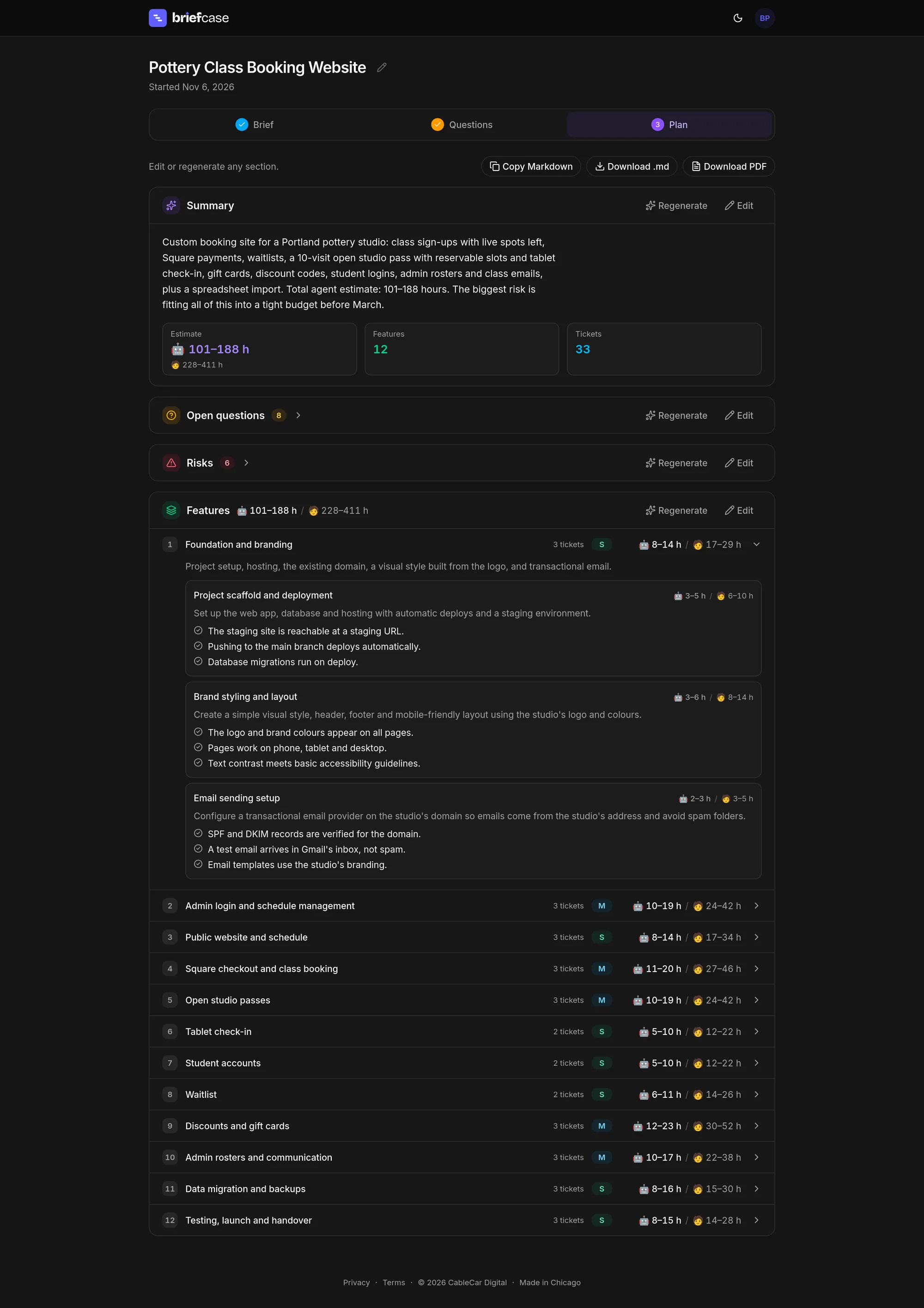
Briefcase
Paste a client brief, answer a few clarifying questions, and Briefcase writes you a discovery plan with risks, tickets and hour estimates.
Briefcase asks up to eight questions that could change the scope, then streams a plan: summary, risks, and tickets with acceptance criteria. Each ticket gets two hour ranges, one for agent-assisted work and one for work done by hand. The model fills a fixed schema, and the server checks each result against the limits and repairs small errors instead of rejecting them.
Dogear
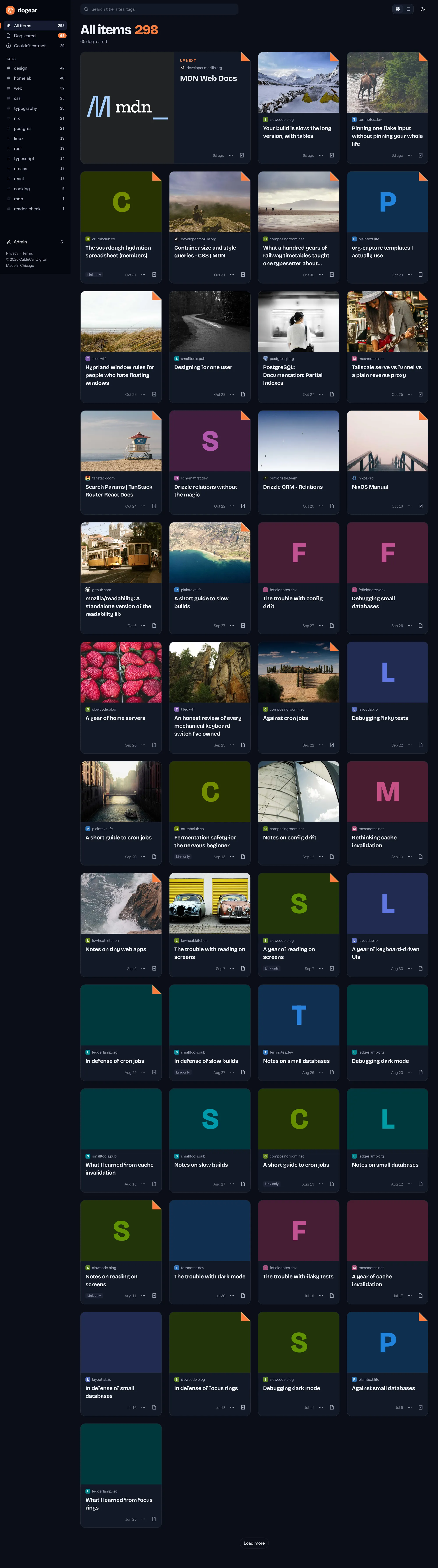
A read-later app. Save a page from the address bar, and the server fetches it, keeps a clean copy of the article, and files it under your tags.
Type rl rust async in the address bar and the page is saved with those tags. The server keeps a clean, sanitized copy of the article. Opening an item doesn't mark it read. It's my standard first-version client stack in practice: invites, migrations, object storage, email, and tests.
Tally
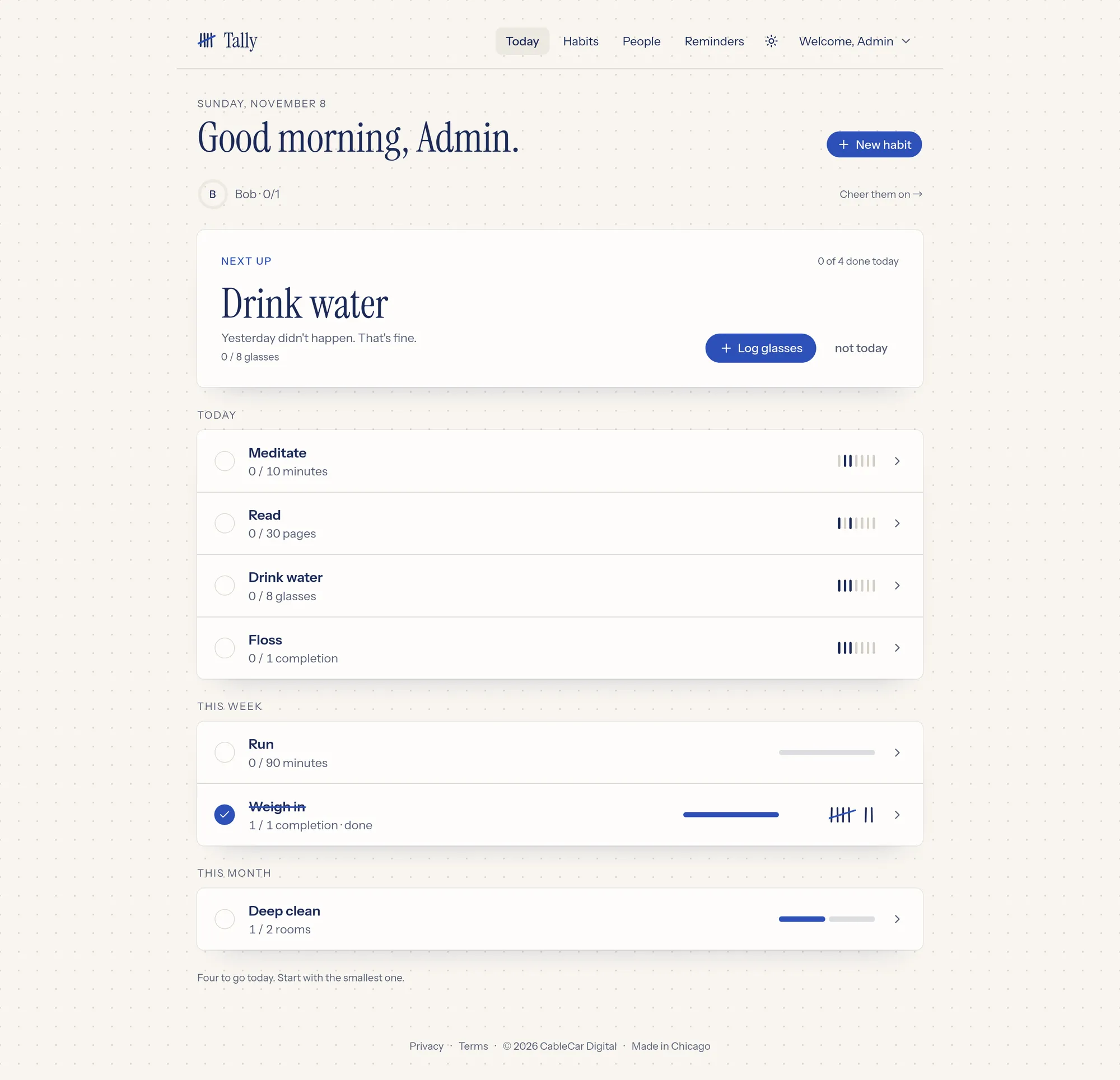
Habits shared with a partner or a few close friends. Streaks count by day, week or month, a pause never breaks one, and you choose who sees each habit.
Progress adds up across each period, and a streak only breaks when a period ends short. A pause isn't a miss. Habits are private until you share them with someone, who can then send a reaction or a short note. I wrote these rules down as specs before writing any code.
lore
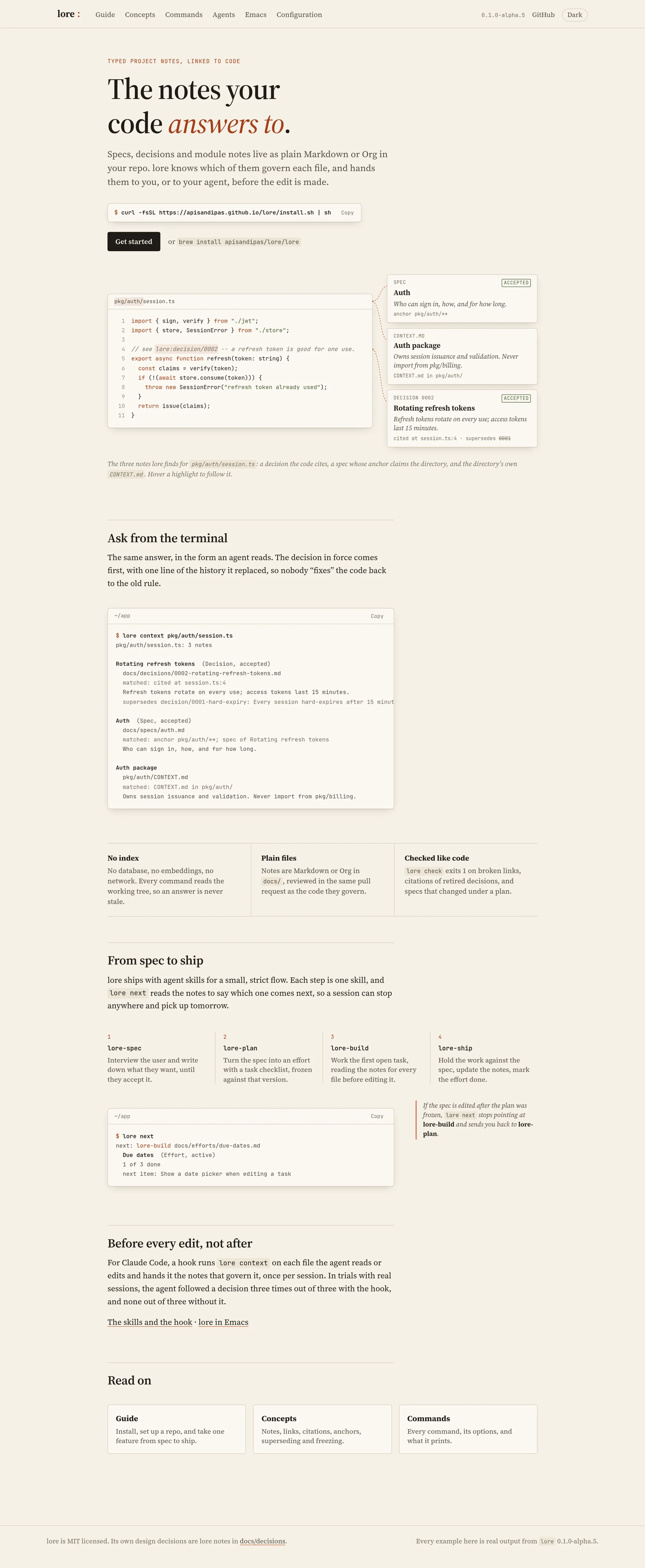
Typed project notes that tell a coding agent which specs and decisions apply before it edits a file.
Ask lore about a file and it lists the specs, decisions and module notes that govern it, and why each one matched. It reads plain Markdown in the working tree, with no index or network, so the answer is never stale. This is how I run agent-assisted projects.
imp
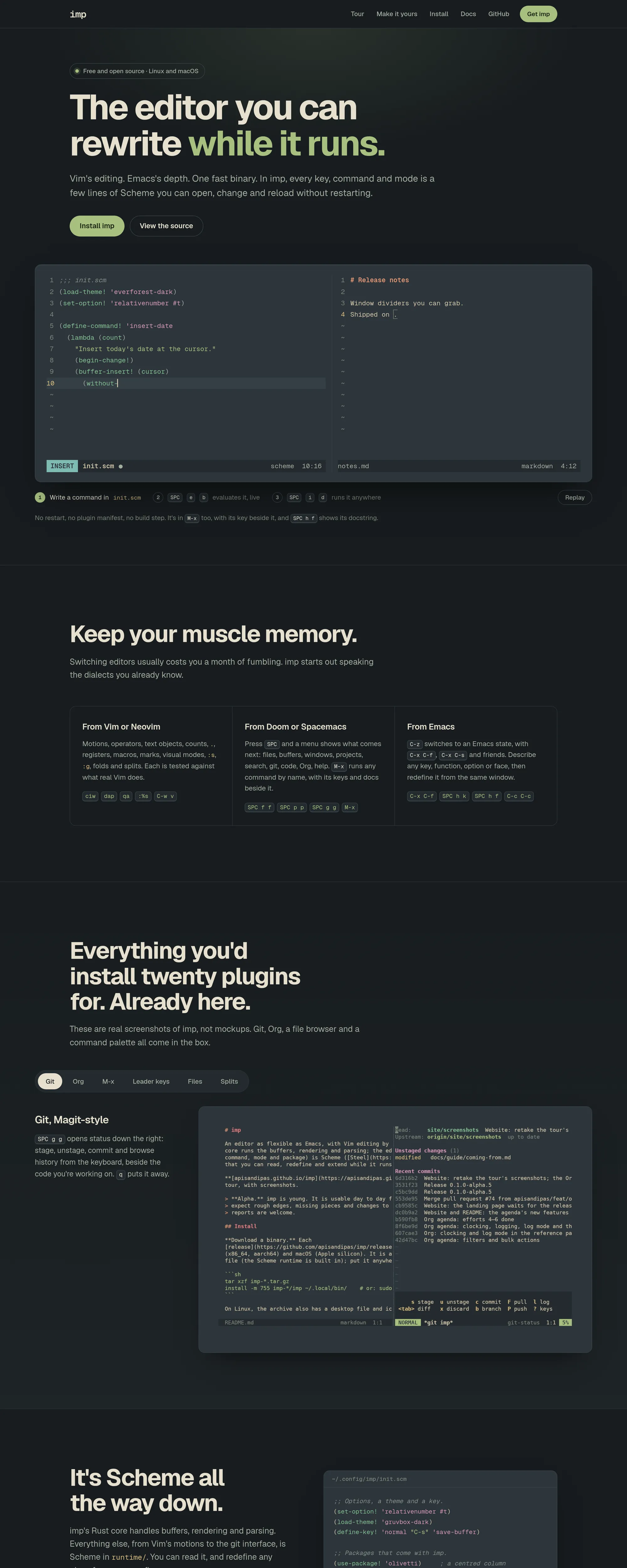
An editor as flexible as Emacs, with Vim editing by default.
A small Rust core handles buffers, rendering and parsing. Every key, command and mode is Scheme (Steel) that you can redefine while it runs. imp is in alpha, but I use it day to day, and it shows I'm comfortable working below the web stack.
juke
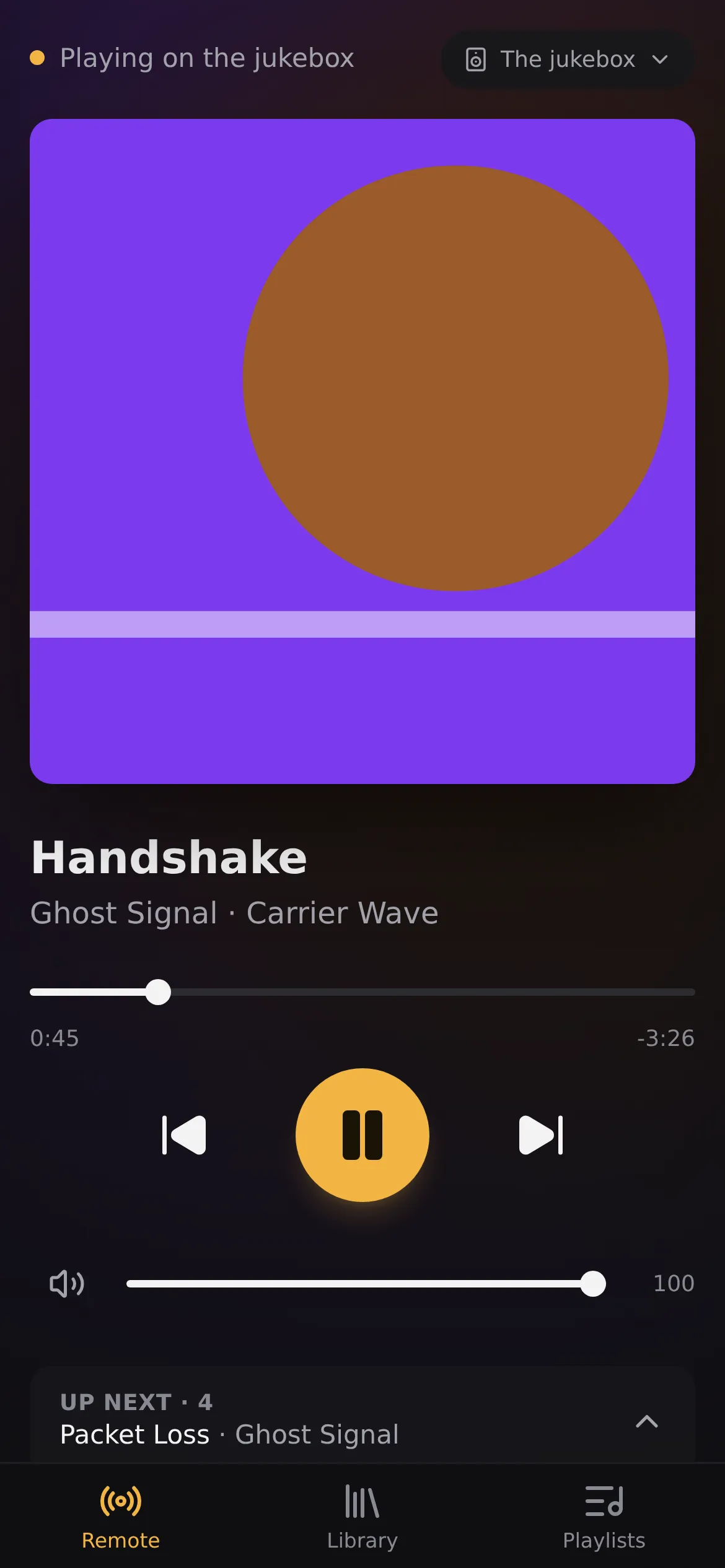
A phone-first remote for Navidrome's jukebox mode, with an optional Ask box that builds a queue from your own library.
A small proxy holds the Navidrome credentials and pushes jukebox state to every open tab over server-sent events. Describe a mood in the optional Ask box and an agent builds a queue from your library. The server keeps only songs that a tool actually returned, so the agent can't suggest music you don't have.
Experience
| Years | Role | Company |
|---|---|---|
| 2023–now | Software Developer & Consultant | Atomic Object |
| 2022–2023 | Consultant & Sr. Front-End Engineer | Kind Systems |
| 2020–2022 | Principal Consultant & Owner | Cable Car Digital, LLC |
| 2019–2022 | Sr. JavaScript Developer | Caxy Interactive |
| 2018 | Lead Front-End Engineer | GroundSpark |
| 2016–2017 | Front-End Engineer | The PROGRAM |
| 2013–2016 | Web Developer | Doejo |
| 2012–2013 | Freelance Web Developer | Self-employed |
| 2010–2012 | Web Designer | Homes.com |
Software Developer & Consultant @ Atomic Object
2023 to now
- Design and build custom web software for Atomic's clients, from early discovery through launch and ongoing support.
- Work in small, self-managed teams alongside designers and delivery leads, owning features across the front end and API.
- Client names are confidential. Happy to talk about the work itself.
Consultant & Sr. Front-End Engineer @ Kind Systems
2022-08 to 2023
- Embedded on the VA.gov Public Websites team at the Department of Veterans Affairs.
- Rebuilt the VA.gov homepage, which sees 20 million unique visitors a month.
- Helped resolve thousands of accessibility infractions across the public site.
Principal Consultant & Owner @ Cable Car Digital, LLC
2020-11 to 2022-08
- Architected and led development of web projects built with React and Express.
- Built a reusable, multi-brand React component library for a top appliance maker (JennAir).
- Helped small startups launch products, including an automated cleaning-service scheduling app.
Sr. JavaScript Developer @ Caxy Interactive
2019-04 to 2022-04 (2019-04 – 2020-10, 2021-10 – 2022-04)
- Helped lead JavaScript applications built with React, Redux, Apollo Client, Node.js and Gatsby.
- Designed REST and GraphQL APIs with Express and Apollo Server.
- Shipped an e-commerce app (Alpine Home Air), an LMS, investor and client-screening portals, and responsive email templates.
Lead Front-End Engineer @ GroundSpark
2018-02 to 2018-11
- Owned new front-end features on a large Rails + Backbone/Marionette app for a social-media SaaS startup.
- Planned the roadmap for an incremental move to React, and led the front end of a new social analytics dashboard.
Front-End Engineer @ The PROGRAM
2016-08 to 2017-10
- Built internal tools, including a retail-associate training portal, for high-profile athletic-apparel clients with Craft CMS, WordPress and React/Redux.
- Consulted on technical choices and feature planning.
Web Developer @ Doejo
2013-02 to 2016-01
- Full-stack developer in a fast-paced agency and startup studio: WordPress, Rails, Express and Angular SPAs.
- Led the React rebuild of Zap2It's TV listings grid for Tribune Media.
- Advised sales on technical recommendations for proposals.
Freelance Web Developer @ Self-employed
2012-03 to 2013-02
- Built sites and apps for small businesses, agencies and startups with WordPress, Rails and Sinatra.
Web Designer @ Homes.com
2010-01 to 2012-03
- Built personalized templates for real-estate agents, and set the department's coding standard.
- Ran departmental training in HTML5, CSS3 and JavaScript/jQuery.
Skills
| Languages | TypeScript, JavaScript, SQL, HTML & CSS |
|---|---|
| Front end | React, TanStack, Tailwind CSS, Astro, Next.js |
| Back end | Node.js, Bun, Hono, TanStack Start, REST & GraphQL APIs |
| Data | PostgreSQL, Drizzle ORM, SQLite, Redis |
| AI | Claude API, tool use & structured output, Claude Code |
| Practice | Accessibility (WCAG), design systems, leading small teams, scoping & estimation |
Writing
My Org-Roam Dailies workflow
After discovering PKM (Personal Knowledge Management) during the peak of the pandemic, I've been fairly obsessed with the concept of building a second brain through the practice of linked note-making. I went from Evernote -> vim-wiki ->…
Contact
Open to interesting problems, collaborations, and conversations about Emacs. Email is the best way to reach me.
- bparonto@gmail.com
- GitHub
- github.com/apisandipas
- Twitch
- twitch.tv/cablecardigital
- Résumé
- bryan-paronto-resume.pdf